

One-Year Ijāzah
Certificate Programme
Course in
Sacred Learning
with Shaykh Jihād Hāshim Brown
In collaboration with
Pillars Seminary
Limited Spots Available
Registration Deadline: October 16, 2026
OCTOBER 10, 2027 - october 10, 2027
8:00 –11:00 AM EST
Saturday and Sunday morning via Zoom
For those who have laid a modest foundation in the Arabic language and long to press further into the study of the sacred sciences, this one-year certificate course offers a rare and intimate opportunity: to read the foundational texts of four essential disciplines directly with Shaykh Jihād Hāshim Brown, a classically trained scholar holding advanced ijāzāh khāṣṣah from some of the most distinguished authorities of Syria and Morocco.
This programme is an independent course of study conducted under Shaykh Jihād’s own name and sanad, offered in collaboration with, and administratively facilitated by, Pillars Seminary.
Programme Overview
Across twelve months, students will read one foundational matn (primary text) in each of four core disciplines, under the direct guidance of Shaykh Jihād. The pedagogical approach draws on the classical ḥalaqah model—close reading, oral transmission, and dialogic engagement—while incorporating visual aids, guided discussion, and periodic assessment suited to a contemporary learning environment. Instruction will be conducted in both English and Arabic, supplemented, where useful, by additional readings in either language.
Program Details
Commitment
Part-time
Duration
One year
Disciplines
Four
Schedule
3 hours,
twice a week
Credential
Ijāzah certificate
FORMAT
Live via Zoom
OCT 10, 2027 - OCT 10, 2027
8:00 –11:00 AM EST
Saturday and Sunday morning

Note on Certification
For those who have laid a modest foundation in the Arabic language and long to press further into the study of the sacred sciences, this one-year certificate course offers a rare and intimate opportunity: to read the foundational texts of four essential disciplines directly with Shaykh Jihād Hāshim Brown, a classically trained scholar holding advanced ijāzāh khāṣṣah from some of the most distinguished authorities of Syria and Morocco.
This programme is an independent course of study conducted under Shaykh Jihād’s own name and sanad, offered in collaboration with, and administratively facilitated by, Pillars Seminary.

Prerequisites
Applicants should have a basic working knowledge of Arabic grammar (naḥw) and morphology (ṣarf), roughly equivalent to Matn al-Bināʾ and the ʾĀjurrūmiyyah with basic commentary. This is not a beginner’s course and assumes familiarity with unvocalised or lightly vocalised classical texts. Those unsure of their level may inquire about a brief placement conversation before enrolling.
Curriculum
The Four Disciplines
Traditional Muslim scholars all classified the religious sciences (al-ʿulūm al-sharʿiyyah) into interlocking disciplines, each possessing its own subject matter, aims, and methods. This programme draws its four subjects from that classical taxonomy.
Qurʾān Studies
ʿUlūm al-Qurʾān (Qurʾānic Sciences) is the study of the sciences related to the Qurʾān, including its revelation, recitation, abrogation, and the proper etiquette of those who learn and transmit it.
Assigned Text
Zubdat al-Itqān fī ʿUlūm al-Qurʾān
Composed by al-Sayyid Muḥammad ibn ʿAlawī al-Mālikī (d. 2004), this work is a concise abridgement of Imām al-Suyūṭī’s al-Itqān fī ʿUlūm al-Qurʾān. It provides a brief yet thorough introduction to the major sciences related to the Qurʾān and is well suited to students beginning formal study.
Hadīth Studies
Muṣṭalaḥ al-ḥadīth is the science of evaluating Prophetic reports, including their authenticity, chains of transmission (isnād), and content (matn). This course combines the study of ḥadīth methodology with a brief reading of transmitted ḥadīth texts.
Assigned Text
al-Manẓūmah al-Bayqūniyyah
This thirty-four-verse poem by ʿUmar ibn Muḥammad al-Bayqūnī (d. 1669) introduces the principal categories and terminology of ḥadīth. It has long served as a foundational text in the study of ḥadīth methodology. The course will pair its study with a brief reading of selected Prophetic reports.
Islamic Theology
Uṣūl al-dīn (ʿaqīdah; ʿilm al-kalām) is the study of the foundations of Islamic belief, including Allah’s attributes, prophecy, the unseen, and the afterlife, using both revealed texts and rational argumentation.
Assigned Text
Manẓūmat ʿAqīdat al-ʿAwām
Composed by al-Sayyid Aḥmad al-Marzūqī al-Mālikī (d. 1846), this fifty-seven-verse poem provides an accessible introduction to the foundations of Islamic theology, covering divinity, prophecy, and eschatology. Its concise and memorable format has made it a longstanding introductory text in the study of ʿaqīdah.
Jurisprudence
ʾUṣūl al-fiqh is the study of the principles and methods used to derive Islamic legal rulings from the Qurʾān, Sunnah, consensus, and analogy. It focuses on the methodology behind fiqh rather than the rulings themselves.
Assigned Text
Tashīl al-Ṭuruqāt fī Naẓm al-Waraqāt
Composed by Sharaf al-Dīn al-ʿAmrīṭī (d. 1581), this didactic poem presents the foundational principles of uṣūl al-fiqh in an easy-to-memorise form. It is a versification of Imām al-Ḥaramayn al-Juwaynī’s al-Waraqāt, covering the sources of Islamic law and the basic principles of legal reasoning.
The Iḥsān Dimension of Our Studies
Traditional Muslim scholars all classified the religious sciences (al-ʿulūm al-sharʿiyyah) into interlocking disciplines, each possessing its own subject matter, aims, and methods. This programme draws its four subjects from that classical taxonomy. We will make use of the occasion of the study of the four disciplines to integrate the relevant dimensions of iḥsān and spiritual development. Iḥsān is the greatest level of islamic studies and all other fields are supporting arts to that end. If our immersion into the various areas of Islamic learning are not flowing toward this summit then it would not be time well spent. And as Imam Muḥammad Idrīs al-Shāfi ͑ī has said, “Time is like a sword, if you don’t cut with it, it will cut you.”
About the Instructor
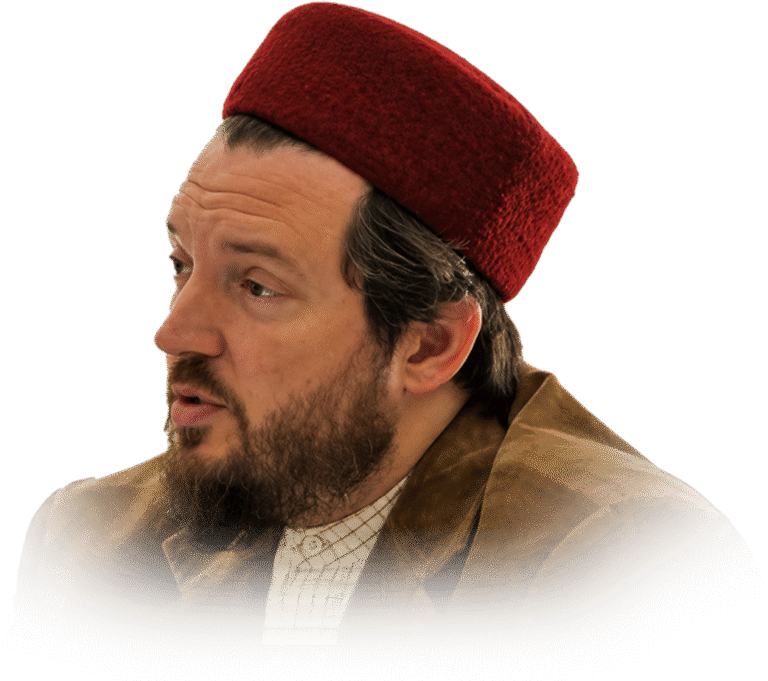
Shaykh
Jihād Hāshim Brown
Shaykh Jihād Hāshim Brown is a classically trained Muslim scholar of the traditional Islamic disciplines, with particular depth in theology and jurisprudence. Born in Santa Ana, California, and holding degrees in Psychology and Ottoman Studies from Rutgers University, Shaykh Jihād went on to pursue a rigorous classical curriculum with prominent Sharīʿah authorities in Syria and Morocco; at whose hands he was granted advanced licenses (ijāzāt khāṣṣah) authorising him to teach and transmit these sacred disciplines. His teachers include such luminaries as Muḥammad Adīb al-Kallās, Saʿīd Ramaḍān al-Būṭī, Muḥammad ʿAlī al-Shuqayr, Usāmah al-Rifāʿī, al-Faqīh, Muḥammad al-Ghālī al-Dādisī, Muḥammad Muṭīʿ al-Ḥāfiẓ, and the eminent spiritual master ʿAbd al-Raḥmān al-Shāghūrī.
Alongside his traditional formation, Shaykh Jihād holds postgraduate degrees in Philosophical Theology from the University of Cambridge, including work on ‘Philosophy of Mind in the Kalām Theology of ʿAbd al-Raḥmān al-ʾĪjī’ and ͑ Critical Study of Heidegger’s Problem of Onto-theology in Light of ʿAbd al-Ghanī al-Nābulsī’s Synthesis of Scholasticism and Neoplatonism’. He is the author of ‘Metaphysical Dimensions of Muslim Environmental Consciousness’ (2012) and ‘The Problem of Reductionism in Philosophy of Mind and its Implications for the Principle of Soul’ (2013); with ‘Conference of the Trees: Language, Meaning, and the Cogency of Possibility’, forthcoming.
A recognised public intellectual, Shaykh Jihād has appeared on the BBC, CNN, IQRA, MBC, and ART, and has written extensively for print and online media. He served formerly as CEO and Director of Research of an Islamic Research Foundation in Abu Dhabi, as a research associate at the Emirates Centre for Strategic Studies, and as Resident Scholar and associate professor at Bayan Islamic Graduate School. He continues to be regularly consulted by public and private institutions in the West and the Arab world on matters pertaining to Islam and Muslim society.
Exclusive Masterclass Resources
You will gain access to exclusive Masterclass resources created by the Shaykh to support your understanding of the material and help you teach it with greater clarity and confidence.


Sample preview · 4 pages